Under the Volcano
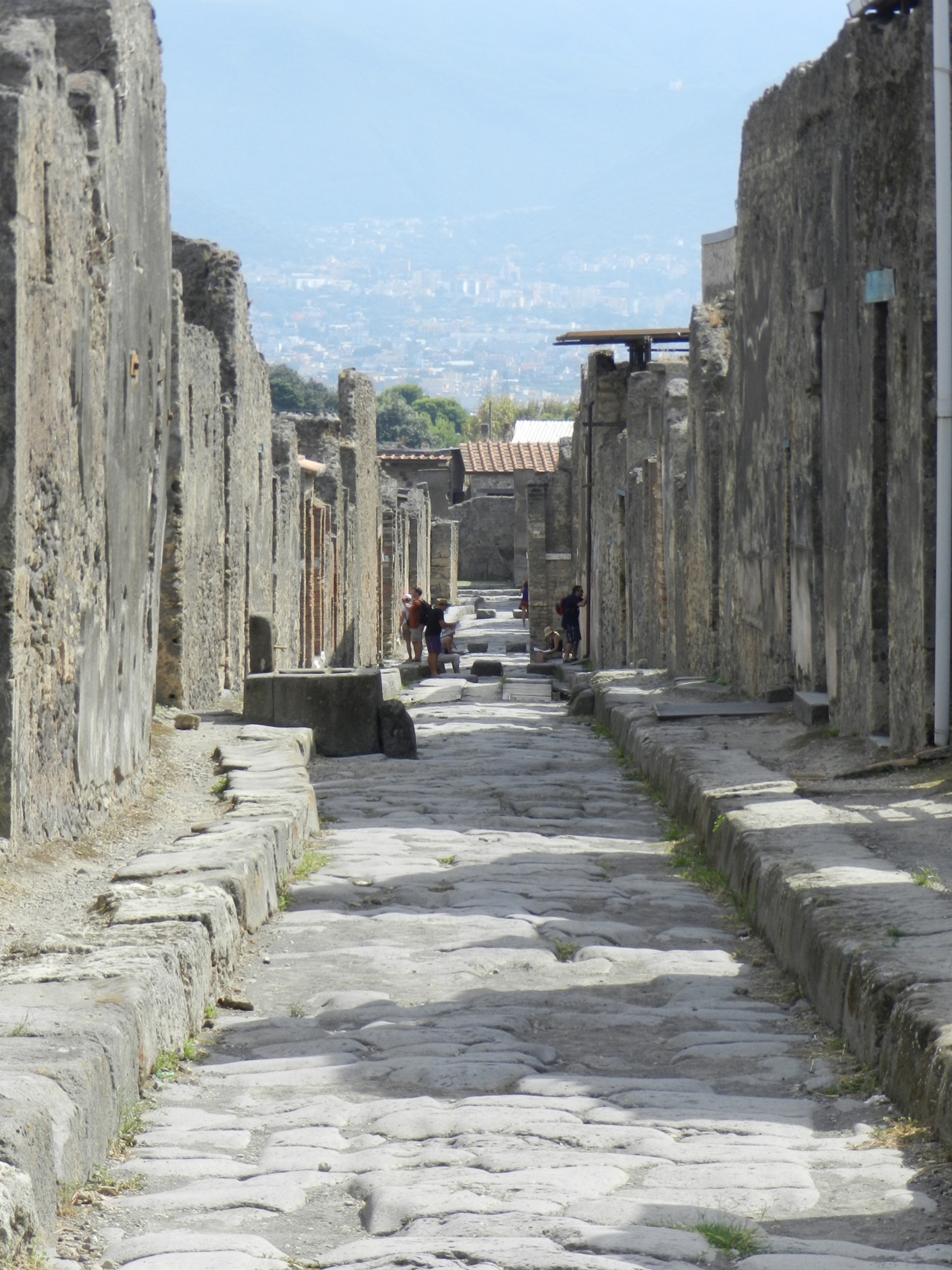
I was getting very close now to Rome. Still I couldn’t resist one more turning in the road — this time to Pompeii — to stand in the ruins of a once thriving town and look up at Mount Vesuvius.
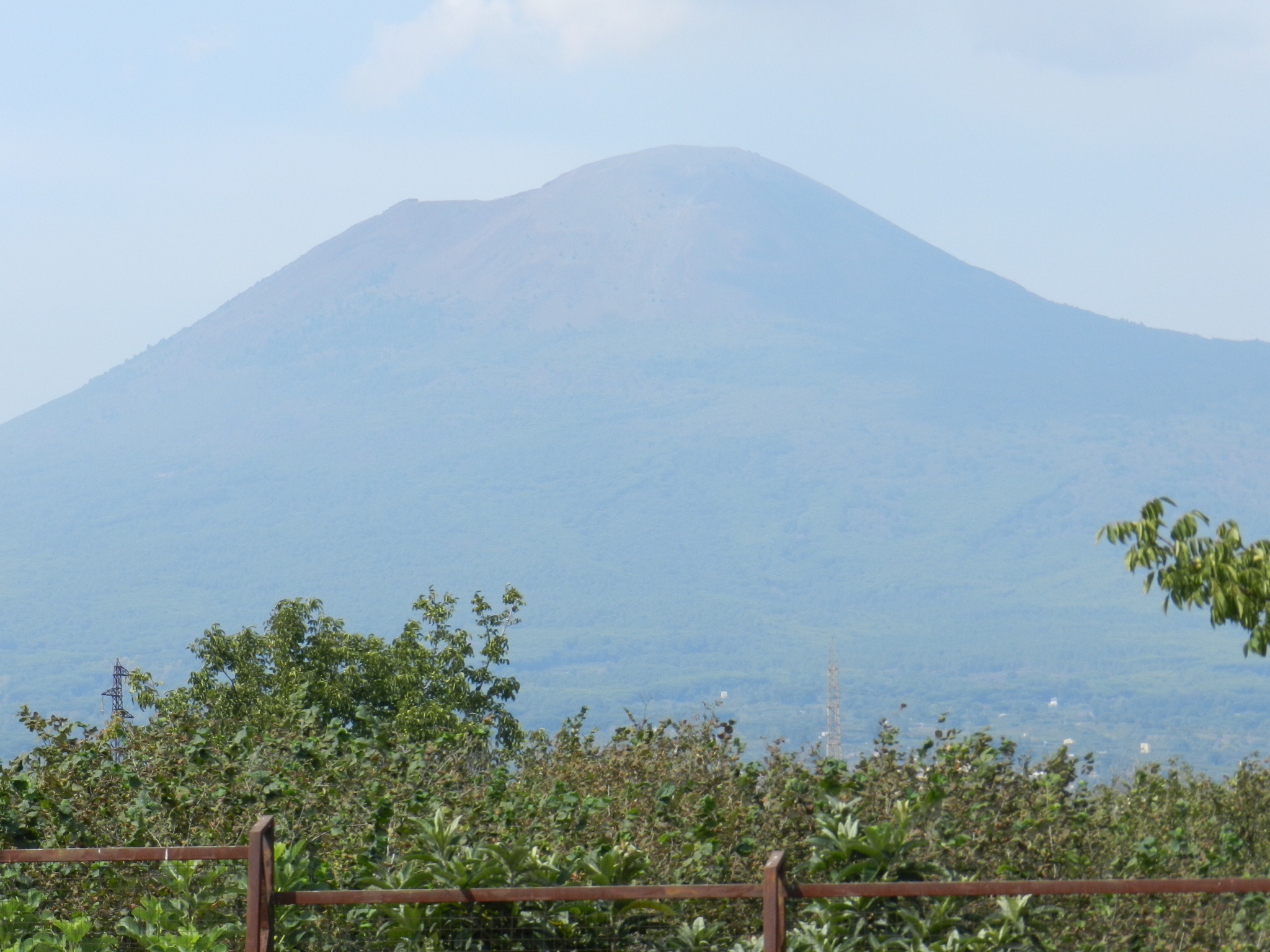
As schoolchildren many of us were told about its epic eruption in the year 79 AD that buried Pompeii, killing thousands of residents. What I didn’t realize, however, is that Vesuvius remains the single most active volcano in Europe.
In preparation for a hike to its summit, I learned Vesuvio (in Italian) erupted six times in the 18th century, eight times in the 19th century, and the first time it erupted in the 20th century — on April 7, 1906 — the volcano killed more than 100 people and damaged a good portion of nearby Naples. Rome then was on the brink of hosting the 4th Olympiad, but so much money had to be diverted to rebuilding southern Italy that the 1908 Games were moved to London instead.
In fact a strong case could be made that Vesuvius today is the most dangerous volcano in the world — since more than 4 million people now live in the greater metropolitan area of Naples, which virtually lies in its shadow, six miles to the west. Little Pompei is just as close to Vesuvius to the south, and that’s the direction the wind was blowing when it erupted in 79.
Standing there this week in ruins that were once buried more than 10 feet deep in ash, I tried to imagine what that day must have been like for all the parents and children in town. To a remarkable degree, we already know — thanks to the eyewitness account of a Roman poet and letter-writer known as Pliny the Younger, the preservative effect of the ash itself, and, of course, all the sleuthing and digging by modern-day archaeologists and volcanologists.
They now estimate the eruption shot millions of tons of rock and ash 20 miles high with 100,000 times the thermal energy of the bomb that was dropped on Hiroshima. Soon the ash cloud cooled and began to rain down on Pompei like the world’s worst hailstorm.
Most of the town’s 10,000 residents took that opportunity to escape, finding refuge in villages to the north, away from the ash cloud, or in the open sea to the west. For more than 2,000 residents who remained behind, however, the worst was yet to come.
It arrived during the night in the form of a ground-devouring wave of gas, fire and molten rock — what geologists call a pyroclastic flow — racing downslope at perhaps 100 mph, incinerating everything in its path. Additional pyroclastic surges followed the next day.
One of its victims was the uncle of Pliny the Younger — Pliny the Elder — who observed the eruption from 15 miles away the day before and sailed to Pompeii to assist on the beach. He died trying to help. (If you’re interested, there’s a nicely written story that appeared in Smithsonian Magazine a few years ago with amazing specificity on what various victims of Vesuvius were doing at the moment they perished.)
It’s reasonable to wonder: Why would so many people, both then and now, choose to live so close to a volcano? And there’s a pretty good answer — one I was able to observe firsthand as a bus transported me to the Vesuvius trailhead high on its upper slopes. Namely, that the ash it emits to the surrounding slopes and lowlands results in a very dark, rich and fertile soil that’s excellent for growing crops. And if devastating eruptions only occur once a millennium or so — who’s to remember?
Here’s what I’ll remember: Hiking briskly up the final mile of trail to the summit of Mount Vesuvius and then looking over the rim into the (temporarily) rock-solid caldera — and thinking about its hidden power and terrible beauty and all those 1st-century families below.
The bus tour I’d joined had advertised the experience as a chance to “walk around the circumference of the rim,” and that’s what I intended to do. But the driver also told me I needed to return to the trailhead in a half hour if I expected to catch my train for Rome (and home). So I needed to finish my own circumnavigation at a jog, then pick up the pace going down. Which out of necessity is exactly what I did. And that’s what I’ll remember: Jogging in the sun around the rim of Vesuvius, then running to catch a train going down.
 Rowing with Ulysses
Well done. Candidly, Etna in Sicilia, can’t be too far behind in activity. I’d have guessed that volcano.
You may have seen evidence left over of the old funicular railway that scaled Vesuvius built in the late 19th century. Was destroyed in a mid 20th century eruption. For a long time a great source of Italian engineering pride. In fact, a very famous Neapolitan song was written to commemorate the feat. Here’s Andrea Bocelli’s version below from YouTube.