Follow the gleam
I’d never been to Rome before.
Just as I’d never been to Vienna. Or Prague. Or Berlin. Or Copenhagen. Or any number of other places I just got through visiting on my two-month-long, very-low-budget, round-about tour of Europe.
Then again, there was an earlier time in my life when I could have said the very same thing about Alaska, or Washington, or Oregon.  Or before that the northern half of my home state of California. And before that certain parts of my home town of Long Beach. And before that anything beyond the nine-block walk to my kindergarten class, which use to mark the very edge of my 5-year-old world.
So that’s the point.
Each journey pushes out the margin of our known world farther and farther, in one way or another, as long as we live. Just as that aging mariner-king Ulysses described it in the Tennyson poem (which I cited at the very beginning of this journal):
I am a part of all that I have met;/ Yet all experience is an arch wherethrough/ Gleams that untravelled world, whose margin fades/ Forever and forever when I move … / And this grey spirit yearning in desire/ To follow knowledge like a sinking star/ Beyond the utmost bound of human thought.
Personally I don’t think of myself as a grey spirit, but I understand how Ulysses might have felt about following knowledge “like a sinking star,” because the pursuit of new people and places was easily the most pleasant part of my trip.
I mean, let’s face it: Rome is pretty special.
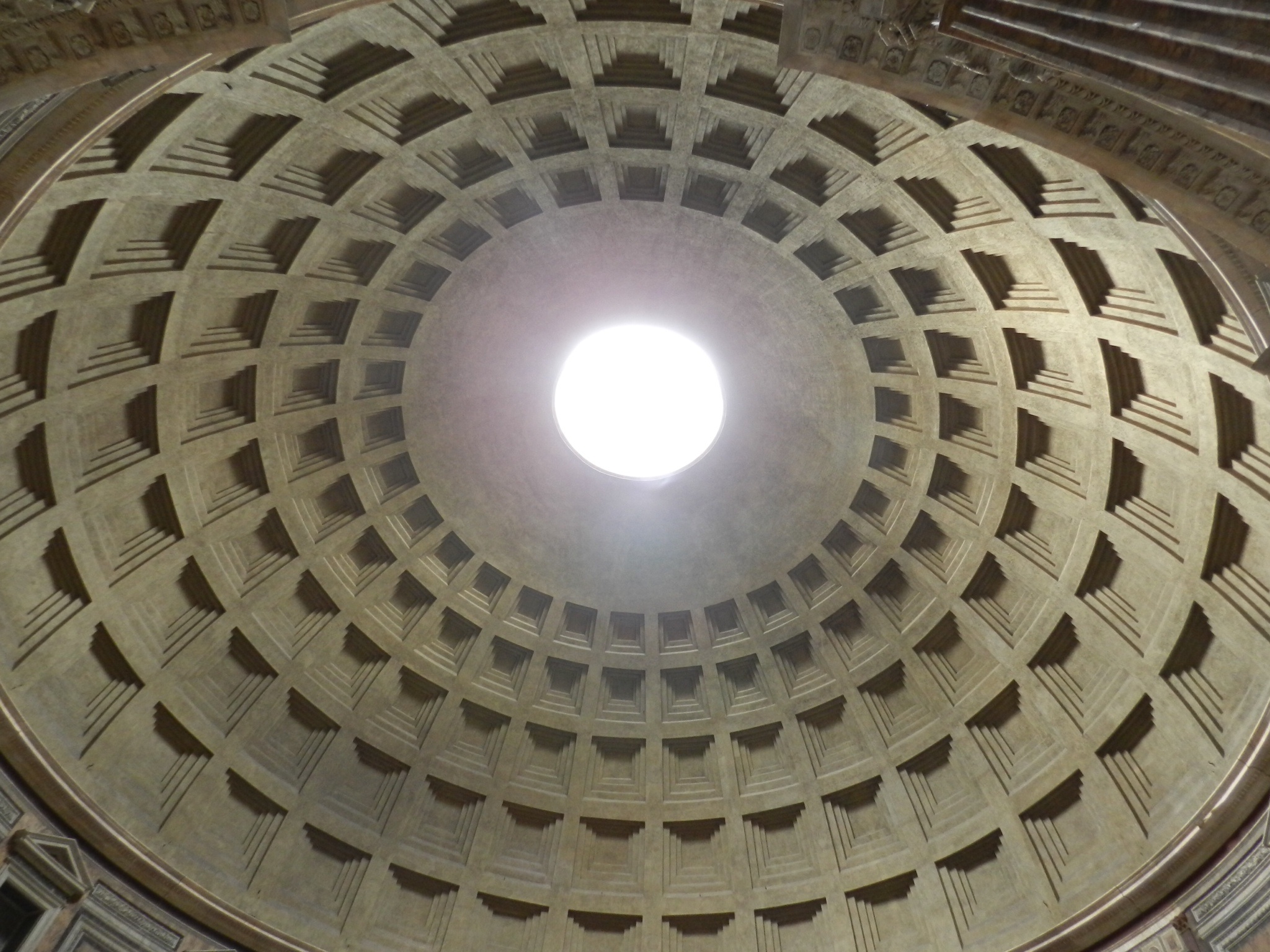
 Since I had four days there prior to catching my flight home, I’d ample opportunity to “see the sights” — the top tourist attractions — from the Colosseum, to the old Roman Forum, to the Trevi Fountain, to the Spanish Steps, to the Vatican with its St. Peters Basilica and Sistine Chapel. And (happily) I was seeing them in September — after the crush of August tourists had already come and gone and summer’s heat had lost its grip. There was even a rumored pope-sighting.
But I also had a chance to simply take a nice long walk from one side of Rome to the other, passing through a variety of neighborhoods. And you can’t do that without marveling at how virtually every three blocks contains some new ancient relic of our past that Romans just take for granted.
And you soon see why some of the very first tourists — Barbarian invaders from the north — would have found Rome so appealing, just as we might today. Because, as a species, we’re always looking for the next “best place” to live. And just in case we need reminding, all of us are immigrants.
I once mailed $100 to the National Geographic Society so they could send me a DNA cheek-swab kit that would tell me where my “deep ancestors” came from. When I received it, I followed the simple instructions — brushing the inside of my mouth with the swab, then placing it in a vial — and mailed my sample back to technicians at the society’s Genographic Project.
Did I say “deep ancestors”? I meant really deep, like from the origin of Homo sapiens in Africa with the “genetic Adam” and “genetic Eve” of 200,000 years ago, through millennia of good times and bad times, until, about 50,000 years ago, the ancestors of everyone alive today began to experience a climate that produced lush grasslands and plentiful game in the Middle East that lured “out of Africa” a huge wave of our ancestors. Including mine.
The DNA lab results said that the thin, strictly-patrilineal branch of my family tree (which can be traced through a male’s y-chromosome) ended up in western Europe about 30,000 years ago. Which might explain why my great-great-great grandfather was living near County Donegal when the great Irish potato famiine of the 1840s encouraged him and his siblings to seek a “better place” in Boston.
But the moving on wouldn’t end there. My great-grandfather would seek an even better place in the mining towns of eastern Colorado. And my grandfather, with my dad in tow, would likewise move on to California. Just as my brother and his wife (and later myself) would choose to move from there to Alaska.
Yes, we’re always looking for the next best place — or at least a decent job. For a good long while in America, that immigrant wave was always rolling west. But ever since it crested in Alaska, I can’t help but wonder if it might not finally break back on itself, tossing my three daughters back east. Maybe. And maybe not. We all have to follow the gleam.
 Rowing with Ulysses